- PRODUCTS
- Security Platform
- BioStar X | On-Prem Security
- BioStar Air | Cloud Security
- BioStar 2
- Access Control
- Access Control Units
- Biometric ReadersNEW
- RFID Readers
- Mobile Credential
- Peripherals
- Wireless Door Locks
- SOLUTIONS
- SUPPORT
- ABOUT
- device_hubHUB





- Blogs & Articles



Behind every door is something more important than the door.
Someone arriving for their first day of work. A student late for class. A nurse beginning a night on the ward. A miner emerging from the shaft after a long shift. A commuter trying to make a train. A colleague carrying coffee into a meeting that has already started.
There is always somewhere to go. Someone to meet. Something that was planned. Security is part of all these moments. But it was never meant to be the reason for them.
The most meaningful security does not ask to become the center of our attention. It creates the conditions in which everything else can happen, with greater trust, dignity and confidence.
That is where physical security becomes something more than a collection of doors, readers, cameras, servers and software.
It becomes part of how a place feels.
What is security really protecting?
At its most fundamental, physical security protects people, places and what matters within them. But the purpose behind that protection goes further.
A secured office exists so people can work. A protected school exists so students can learn. A safe hospital exists so someone can care for another person. An access-controlled building exists because, beyond its entrance, people have lives to get on with.
The door is only a moment.
For the security industry, a door can represent an access point, a credential decision, an event or a policy. For the person standing in front of it, the door usually means something else entirely. It means I am here.
The best experience is often the simplest one: the right person arrives, they are trusted appropriately, the door opens like magic as they walk toward it, and their day continues.
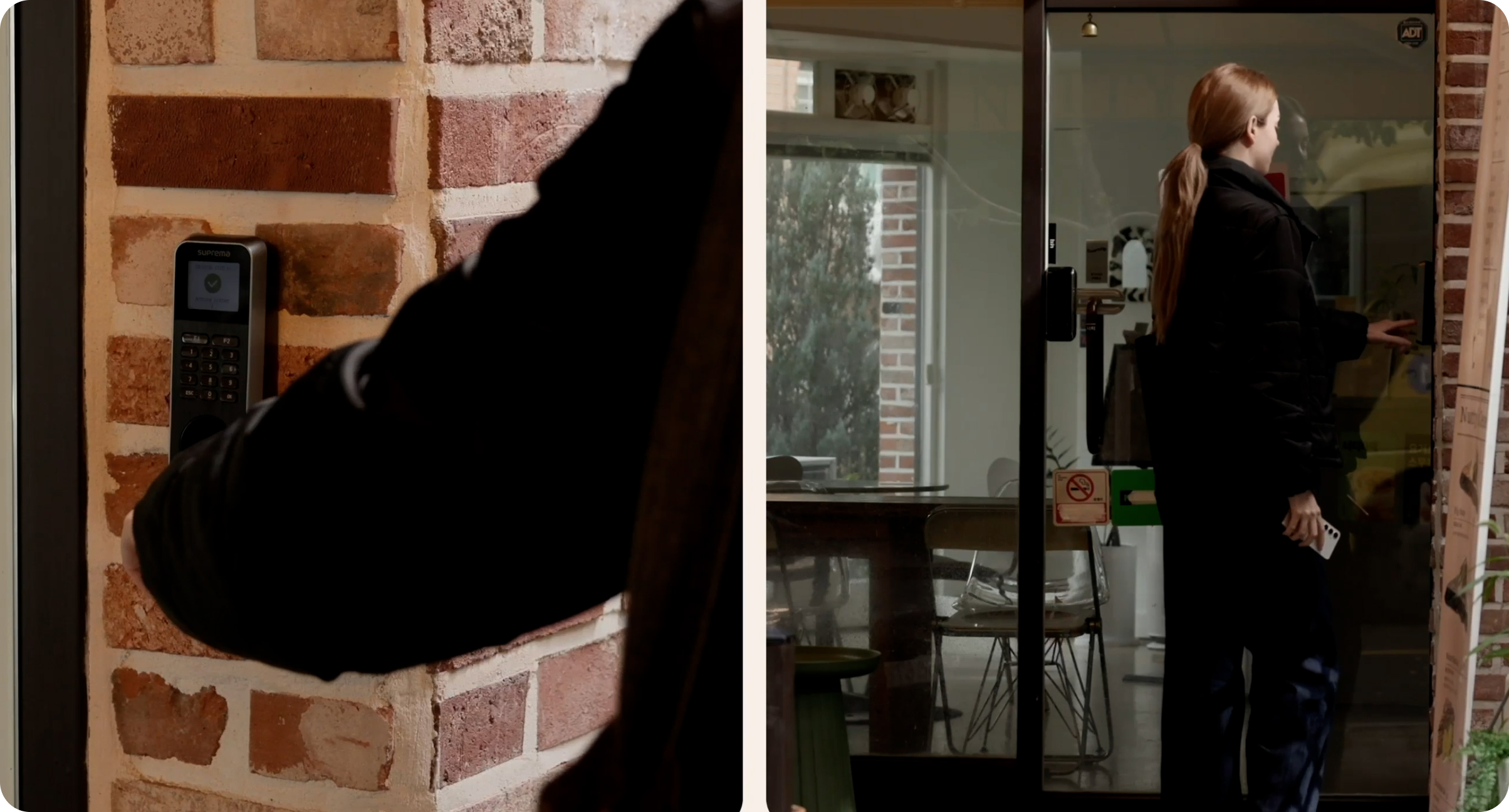
There is an important lesson in that simplicity. A successful security interaction does not need to feel important simply because the technology behind it is sophisticated.
The benefit: complexity can remain behind the experience instead of being transferred to the person using it.
Security is the foundation, not the destination.
Protection matters precisely because of what it allows to happen afterward.
The meeting. The lesson. The journey. The shift. The conversation. The return home.
Security is the foundation. What it makes possible is the story. That principle sits at the heart of Suprema's broader approach across biometrics, access control, on-prem systems, cloud, AI and vision.
Can security be strong without constantly being felt?
Yes. In fact, some of the strongest technology becomes more valuable as the experience around it becomes simpler.
We rarely celebrate the infrastructure that works perfectly in the background. We notice the elevator when it stops. The network when it drops. The traffic light when it fails. Security can work in much the same way.
Invisible does not mean absent. It means the strength of the system does not have to become a burden on the person.
At this point, security begins to make way for everything else.
Make way for trust
Trust begins with confidence that a system will do what it is supposed to do, and no more than it needs to do.
That becomes especially important when identity is involved.
A person’s identity is deeply personal. The technologies used to establish it should therefore be designed with security and privacy as fundamental considerations rather than afterthoughts. In some architectures, that can mean keeping a biometric credential, such as a facial template, with the person on their own device, rather than storing it on a reader or a distant server, and sharing only what is needed at the moment of access.
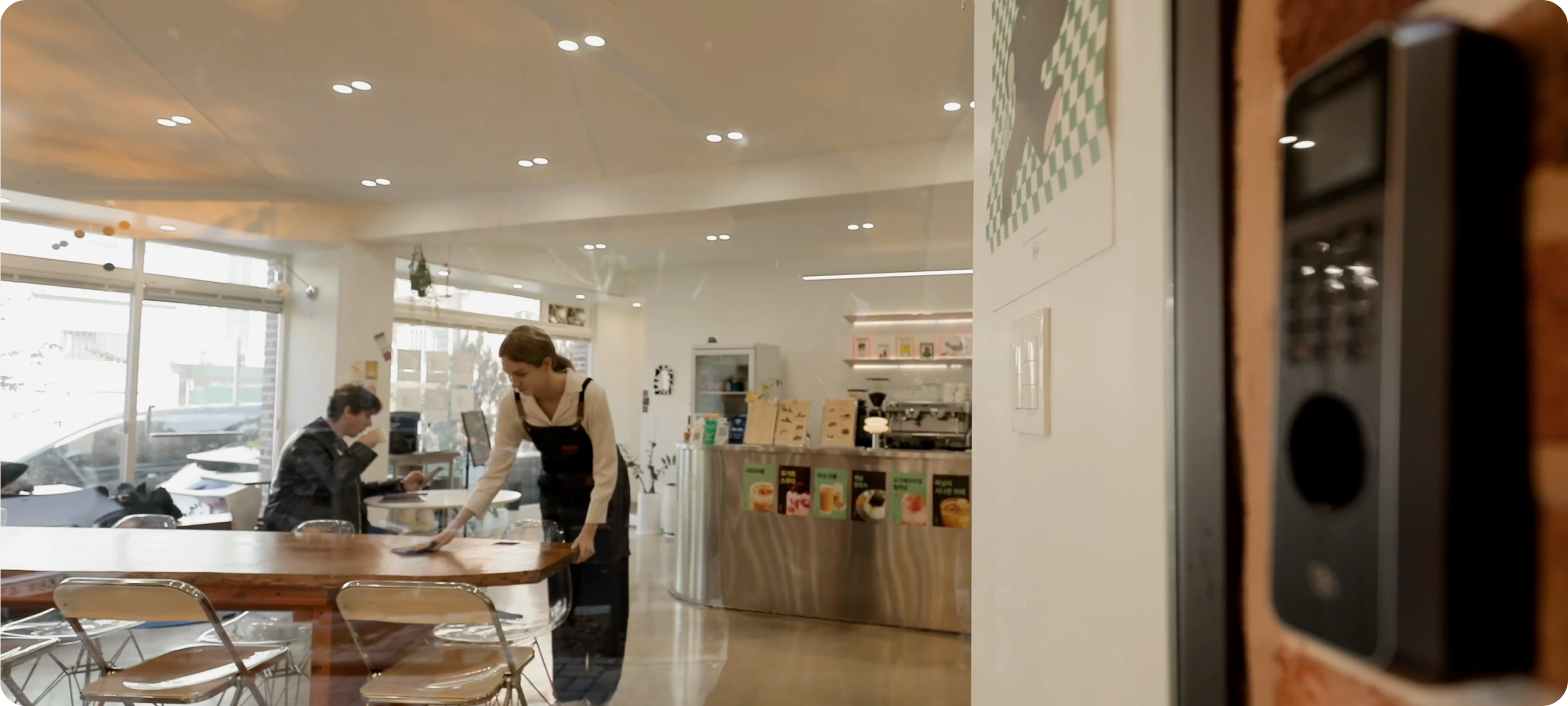
That changes the relationship between people and security technology. Identity does not have to be something surrendered to the system and kept somewhere out of sight. It can remain closer to the person, under their control, while still enabling a secure and seamless authentication experience.
When security respects that relationship, authentication becomes less about handing over identity to a machine and more about allowing the right person to prove who they are, on their terms, and continue on their way.
The benefit: security can protect access while preserving privacy, control, and a stronger sense of personal agency.
Make way for dignity
There is a subtle difference between being securely admitted and being made to feel as though you are under suspicion, or simply made to feel that the system was not designed for you.
People feel that difference.
They feel it in a queue. In an awkward interaction with a reader. In repeated checks. In the uncertainty of not knowing whether the system has understood them. And they feel it when access depends on a process that is confusing, unfamiliar, or unnecessarily difficult to use.
For someone who is older, less comfortable with technology, carrying bags, managing a disability, or simply in a hurry, even a small moment of friction can become a moment of embarrassment or dependence.
Technology should not make ordinary access feel like a test.
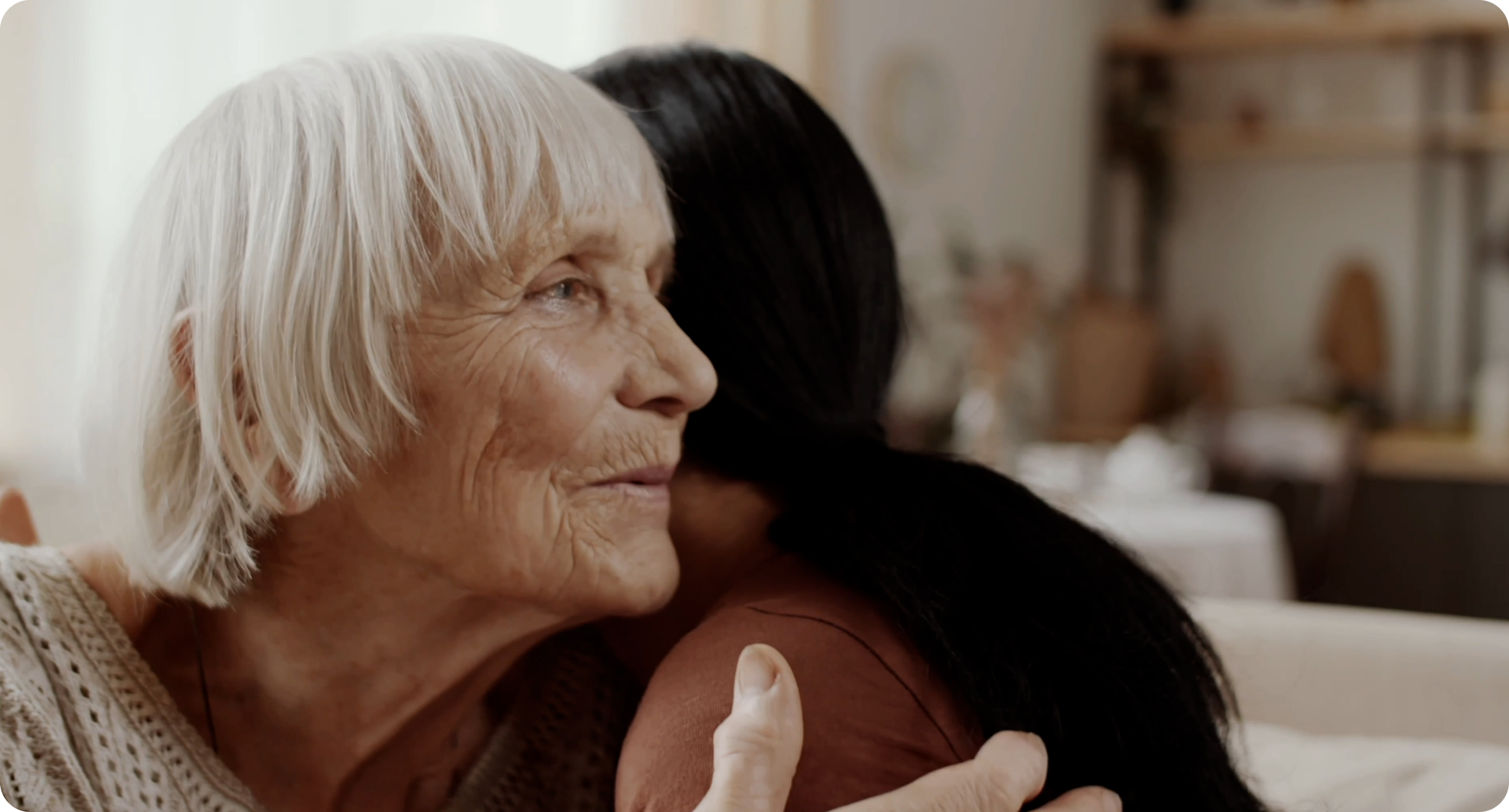
Consider something as routine as entering work, a hospital, or a residential building. The security requirement is real. So is the person's experience of that requirement. When authentication is intuitive, inclusive, and easy to understand (a.k.a when the environment responds naturally and offers people a clear way through), security and dignity do not have to compete.
The benefit: a secure environment can remain easy to use for a wider range of people, without making anyone feel incapable, excluded, or like an obstacle in their own surroundings.
Make way for confidence
Confidence is what remains when security works without demanding attention.
It is the feeling of entering a building and trusting that the right protections are already in place. Of moving through a campus, workplace, hospital, school, or public space without having to question whether the systems around you are doing their job.
But confidence should not have to end at the door.
The moments between secure places matter too: the walk home from school, the journey between buildings, the time between leaving work and arriving home. Security can help create greater certainty around those transitions, not by watching every movement, but by turning meaningful moments into useful information.
Consider a student leaving school. The simple act of checking out can do more than record an access event. In a connected environment, it could become a reassuring signal to a parent that their child has left and is on the way home, or an indication that something is different from the expected routine.

The same principle can extend across the places we share. A well-protected school, workplace, residential building, station, or public facility does not exist in isolation. Each can become a trusted point within a wider community. As more of these spaces become safer, more intelligent, and better connected, they can contribute to a stronger sense of security beyond their own walls.
Confidence also matters to the people making decisions behind the scenes. Security teams need confidence that an access decision is reliable. Organizations need confidence that different systems can provide the right context. People need confidence that the places they use, and the journeys connecting them, are protected without making them feel constantly monitored.
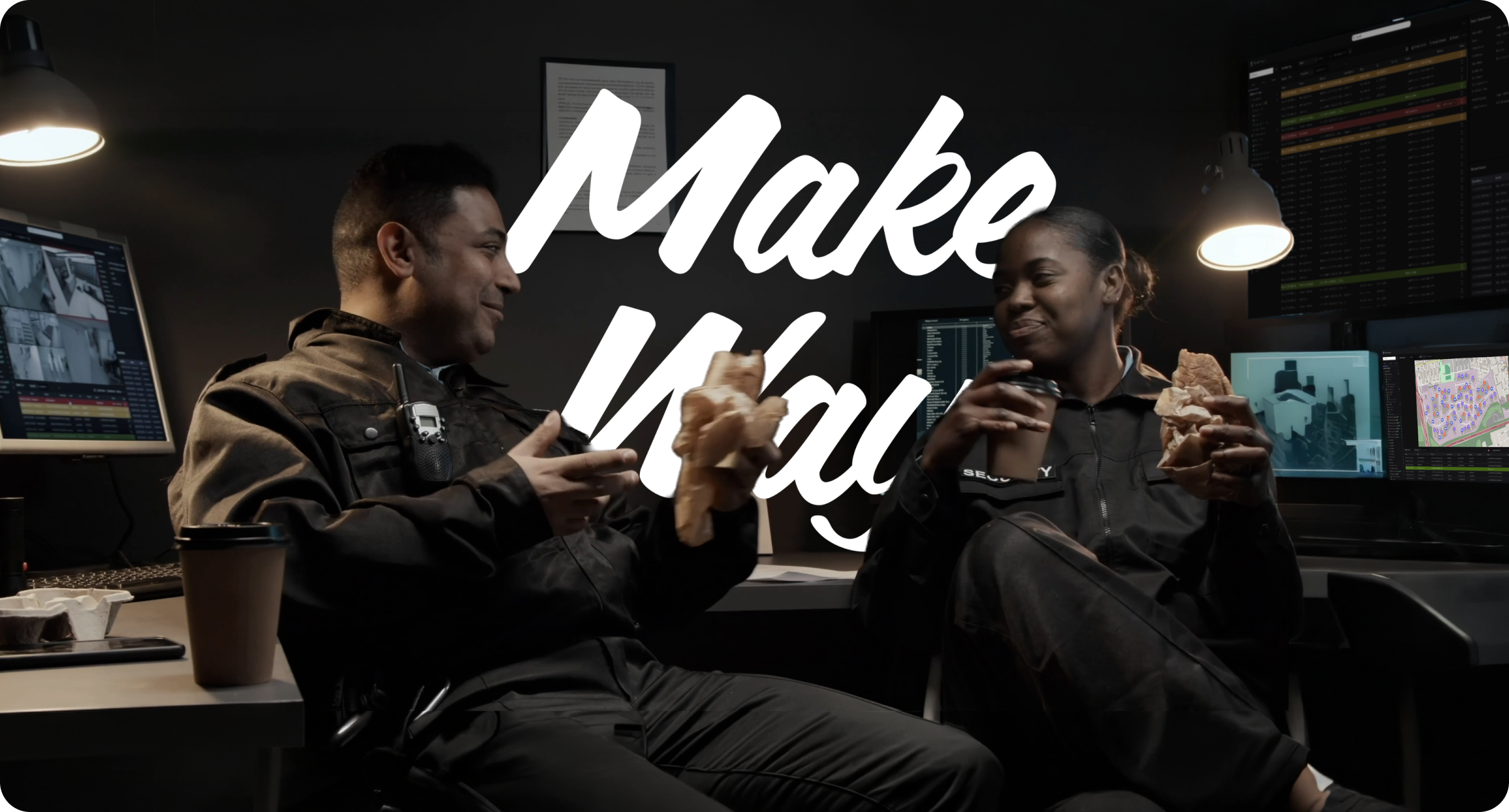
When those things come together, security stops feeling like a collection of checkpoints. It becomes part of the environment around us: present when it is needed, quiet when it is not.
The benefit: people can feel confident not only in the places they enter, but in the moments and spaces between them, free to focus less on security and more on where they are going next.
Does a more human experience mean compromising security?
No. Human-centered security only works when the security underneath it is strong. There is no dignity in a system people cannot trust. There is no confidence in protection that fails when it matters.
The real opportunity is to remove the false choice between strong security and good experience.
Strength can live in the background
Different environments demand different kinds of strength.
Some organizations need the control and resilience of on-prem infrastructure. Others need the reach and flexibility of cloud services. Identity can call for the precision of biometrics. Complex environments can benefit from the wider context provided by vision. AI can help systems process information at the edge and at the core.
Those technologies matter enormously.
But to most people walking through the environment, they are not separate technology categories. They are simply the reason things work.
A parent entering a school does not want a lesson in system architecture. An employee entering headquarters does not need to know where an authentication decision was processed. A visitor should not have to understand the infrastructure connecting one building to another.
They need the experience to make sense.
The benefit: organizations can choose the security architecture their environment requires without making that architecture the user's problem.
Intelligence should create clarity.
More intelligence should not automatically mean more complexity.
AI, connected systems and richer security data are valuable when they help the right information become available at the right moment: enabling a faster decision, understanding a situation more clearly or reducing unnecessary friction.
Technology has a place.
That place is in service of a clearer outcome.
The benefit: innovation becomes meaningful not because more technology is visible, but because less complexity is felt.
What changes when security starts with the person?
The questions change.
Instead of asking only, How do we secure this entrance?, we can also ask, What is someone trying to do after they pass through it?
Instead of thinking only about credentials, devices and events, we can think about movement, context and experience.
Instead of designing people around security systems, we can design security systems around the realities of people.
That perspective matters because people rarely experience security as a category.
They experience a morning.
A building.
A journey.
A moment of uncertainty.
A place where their children spend the day.
A workplace they return to thousands of times.
Security enters those experiences in small ways, often for only a few seconds. Yet those seconds can influence whether a place feels welcoming or hostile, effortless or complicated, trustworthy or uncertain.
When those interactions work well, something important happens. People stop thinking abouty the door. And start thinking about what is beyond it.
What should the future of physical security make way for?
For years, progress in physical security has rightly been measured through greater accuracy, stronger protection, better connectivity, more capable software and increasingly intelligent systems.
Those things remain essential.
But there is another measure of progress worth considering: How much of the person's attention does security really need?
Perhaps the future is not one where technology demands a larger place in everyday life, but one where increasingly capable technology allows itself to occupy a smaller one.
Where privacy stays close to the person.
Where entering feels more like arriving.
Where protection creates confidence rather than anxiety.
Where intelligence helps people make better decisions without making every interaction feel technological.
And where the seconds saved at a doorway return to the people passing through it.
A few seconds for a conversation.
For a train caught instead of missed.
For a child picked up on time.
For work already waiting.
For whatever was supposed to happen next.
Because behind each door is a person, a purpose, a plan.
Security should be strong enough to protect all three.
And thoughtful enough to make way.
Suprema. Make way.